Gas Line Plumbing in Wilmette, IL
A new stove, a gas dryer, a patio grill or a pipe that smells wrong. Fuel piping rewards patience, good materials and a test you can trust. A plumber Wilmette IL traces what runs through the walls and judges its condition.
 (847) 908-9881Call to confirm availability
- Black iron, CSST, flexChosen for each run
- Leak-tested connectionsChecked before ignition
- Village homesWilmette and nearby suburbs
- Permits discussedRules vary by town
- Talk to a personAsk before you commit
Gas Piping, Start to Finish
Gas line plumbing in Wilmette, IL reaches further than most owners realize. Past the pipe feeding the furnace, a typical house has branches reaching the kitchen, the laundry corner, the water heater, a fireplace log set, an outdoor grill and sometimes a standby generator. Every branch carries its own sizing, shutoff and connector needs, and not one of them is a spot for improvising.
Plenty of North Shore houses started life burning coal or oil and switched to natural gas decades afterward, so the visible pipe can be a patchwork from several eras. We trace what runs through the walls, judge its condition and say what can stay. Gas line installation in Wilmette, IL then means adding, rerouting or replacing sections with the right material for each stretch, plus an appliance hookup at the end of every branch.
Range, cooktop and oven lines
Moving from electric to gas, or retiring an old stove, often calls for a new branch, a shutoff you can grab quickly and a connector built for that appliance.
Dryer and laundry hookups
A gas dryer wants correctly sized piping and a flexible connector that is not crushed or stretched in the gap behind the machine.
Fireplaces and log sets
Decorative and heat-producing fireplaces use their own valves and key-operated shutoffs. We connect them and test each joint.
Gas line repair in Wilmette basements and crawl spaces
Rust-scaled black iron, a tired union or a damaged corrugated line gets replaced one stretch at a time, then tested again.
Grills, heaters and generators
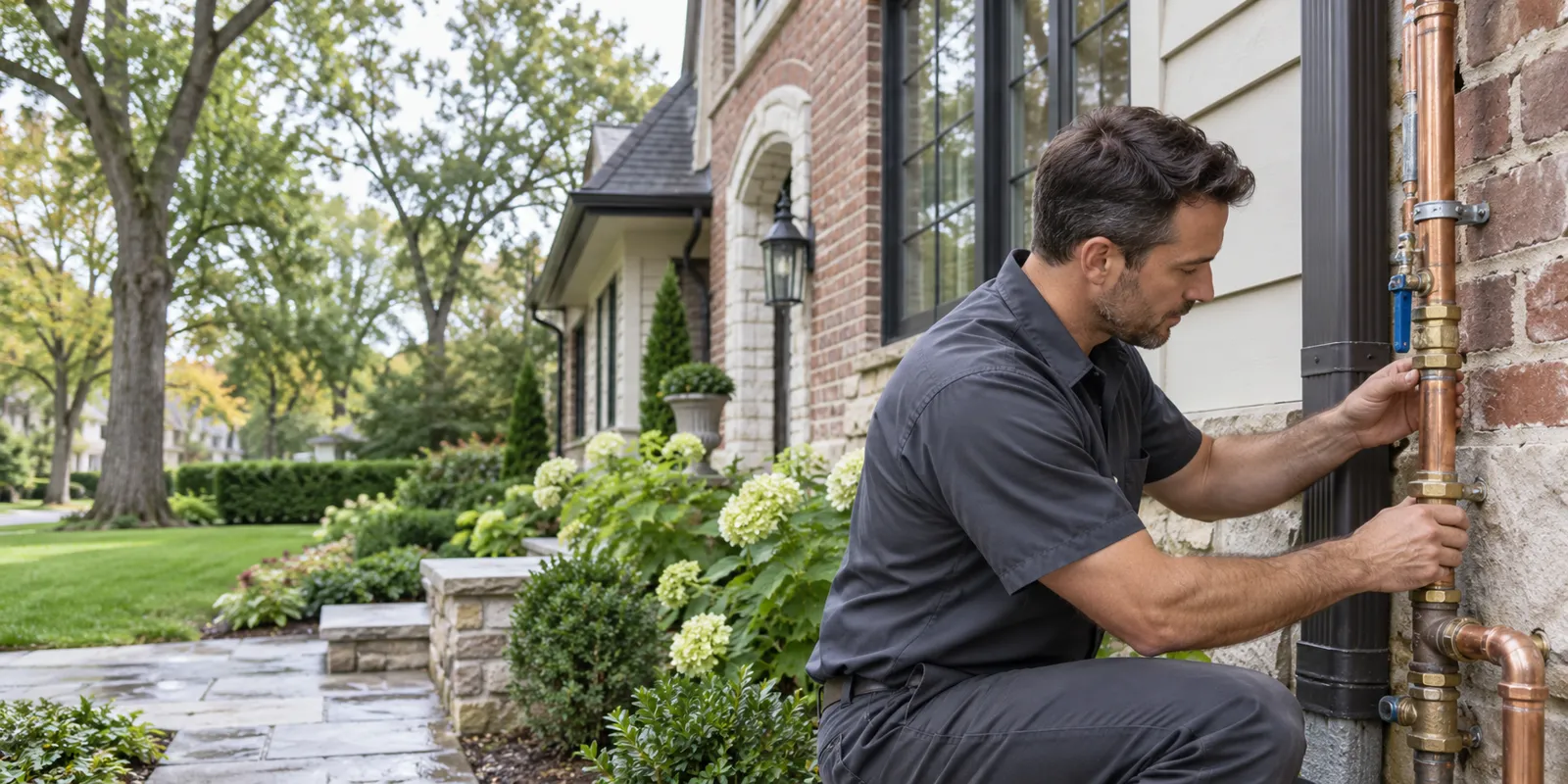
Exterior lines are buried or run along the siding with protection from weather and spades, and each finishes at a valve beside the house.
How Safe Fuel Piping Gets Built
Sizing is arithmetic, not guesswork
Each appliance consumes fuel at a rate measured in BTU per hour, and the pipe serving a branch must carry everything running on it at the same moment. Hang a gas fireplace on a line already feeding a stove and a dryer, and the original diameter may fall short. Undersized pipe starves burners, triggers nuisance lockouts and can conceal a real problem until the coldest night of January.
What a pressure test really is
Once new or altered piping is in place, we seal it off and run a pressure test, watching the gauge for any slow drop. Then we brush leak solution over each fitting, since a bubble can reveal seepage that a dial misses. Nothing is treated as ready until the system holds steady and every joint stays dry and quiet. That takes patience, and it is never where we cut corners.
Where the gas utility fits in
The meter and the service line leading to it belong to the gas utility, and only its crews touch that equipment, including any work done to shut off or restore service. Our work picks up where the meter ends. When piping has been opened or service has been shut off, the utility may need to turn gas back on after the work is approved, so that handoff belongs in the plan. We walk through whatever applies at your address.
What turns up in older houses
Open a ceiling in a 1930s house and you may find threaded iron that has outlived three furnaces, a capped stub nobody remembers and a branch that was extended with a mismatched fitting. None of that is automatically unsafe, but each item deserves an honest look. Paint-flaked pipe in a damp laundry corner, for instance, tells us moisture has been working on the threads. We show you what we find, so you can judge for yourself why a section should come out, with no need to simply trust us. Smell gas? Leave first — a plumber Wilmette IL investigates only after responders clear the building.
Shops, kitchens and multi-unit buildings
Gas loads in a small restaurant, bakery or salon are heavier than in a house, and the piping often passes through ceilings and shared walls. We map where each line runs, confirm the shutoffs are labeled and reachable, and keep staff or tenants informed about timing so service interruptions stay short. In older buildings along Central Avenue or Green Bay Road, we also look for lines that earlier tenants capped carelessly.
When the smell is real
A sulfur smell means get out. Bring everyone, pets included, outdoors without flipping any switch or appliance. Once outside, from a neighbor's lawn, ring 911 or the utility's emergency number. Do not step back inside to hunt for the source, and do not start a car parked in an attached garage. After responders clear the building, we can investigate what leaked and fix it correctly.
A Careful Approach to a Serious Job
Proof instead of assumptions
Each altered run is pressure-checked and bubble-tested before we call it done.
Old piping gets read, not trusted
We hunt for corrosion, mismatched fittings and shortcuts from past owners hiding behind finished walls.
Permit questions answered early
Rules differ from village to village, and we explain what applies before anything is cut.
Right material per run
Rigid pipe, corrugated tubing and appliance connectors each go where they suit.
Clear explanations
You hear what we found, what changed and which valve shuts off each appliance.
Gas Line Plumbing in Wilmette, IL and Nearby Suburbs
Our gas work reaches from the lakefront blocks across to the western side of town, plus several adjoining suburbs. Your street address helps when you phone.
Wilmette neighborhoods
- ZIP 60091
- Lakefront blocks
- Central Avenue area
- Linden station area
- Hibbard Road corridor
Also serving
- Kenilworth
- Winnetka
- Glenview
- Evanston
- Skokie
- Morton Grove
A Gas Job From First Call to Final Test
Sketch the project
Name the appliances involved and where each one sits.
Inspect existing piping
We trace the run, identify materials and locate every shutoff.
Plan the route
You see the proposed path, the connectors and any permit steps. Weighing gas line work? Phone a plumber Wilmette IL — permits and sizing explained.
Build and connect
New sections go in, and each appliance is attached with a suitable connector.
Test and walk through
We pressure-test, leak-check and point out every shutoff.
Fuel Line Questions Homeowners Ask
Is it safe to pull my gas stove out to clean behind it?
Easing a freestanding stove forward a few inches is usually fine if the connector has slack. Disconnecting it, capping a line or swapping a connector is different work. Hoses can crimp and a valve left open creates a hazard, so call a plumber for those steps.
The furnace smells odd when it kicks on. Is that gas?
Dust burning off a heat exchanger after months idle is a common, harmless smell, but a true gas odor is different. If you detect that sulfur note or it lingers, go outside, call the gas utility or 911 and have the system inspected.
Can you plumb gas to an outdoor kitchen?
Yes. Exterior runs are routine for us, whether the load is a grill, a fire table or a heater. They call for weather-rated materials, protection from digging and a valve within easy reach. Tell us the appliance and how far it sits from the house.
When should a flexible appliance connector be replaced?
That corrugated metal hose links a stove or dryer to the rigid pipe. Replace it when it is kinked, corroded or stretched, or when it came with an appliance that has since been swapped for a new one.
Can natural gas appliances run on propane?
The pipe may look alike, but delivery pressure, burner orifices and regulators differ. Each appliance is built or converted for one fuel, so never connect it to the other supply without the manufacturer's conversion kit.
Do gas appliances call for carbon monoxide alarms?
Yes. Furnaces, water heaters and gas dryers can release carbon monoxide when something goes wrong. Alarms on every level and outside bedrooms give early warning, and they deserve regular testing.
Weighing Gas Line Plumbing in Wilmette, IL?
Phone us about the appliance or the odor, and we will outline safe next steps, including what to ask the village about permits.
Call (847) 908-9881Send us your gas project
List the appliances, where each one sits and a phone number that works.
- (847) 908-9881
- info@plumberwilmetteil.com
- 812 Ridge Rd, Wilmette, IL 60091